
Garage Renovation Services in Twin Cities, MN
Local Flooring Contractor Expertise
Edina, Hopkins, and Northeast Minneapolis demand a flooring contractor built for Minnesota winters. Salt spray, freeze-thaw cycles, and tracked moisture break down unprotected concrete faster than most states. Our epoxy flooring and cabinet solutions serve the Twin Cities with systems engineered for the harsh climate and heavy residential use that defines this region.
How We Work
From moisture testing to final topcoat, every step protects against Minnesota's most damaging conditions.
What's Involved
Site Assessment
We test moisture levels and evaluate your slab condition. Minnesota slabs often hold water from seasonal saturation—this step prevents future failures.
Grinding & Prep
We diamond-grind the surface to remove weak material and open the concrete pores. Proper prep prevents peeling and ensures strong bonding in any climate.
Epoxy Base Coat
High-build epoxy reinforces the concrete and seals pores against moisture intrusion. This layer handles road salt exposure and freeze-thaw stress.
Decorative & Topcoat
Optional flake or broadcast layer adds traction and appearance. Final topcoat resists salt, UV, and abrasion from winter boots and hot tires.
Final Inspection
We verify coverage, inspect seams and edges, and confirm all coats have bonded properly before approval for use.
Maintenance Plan
We provide seasonal care guides. Midwest winters demand winter mats and anti-salt measures to keep your floor looking fresh for years.
You'll always know what's happening next—and what to expect from your floor in Minnesota winters.
Our Services
Specialized flooring and cabinet solutions for Twin Cities homes and light commercial spaces.
Epoxy Floor Coating
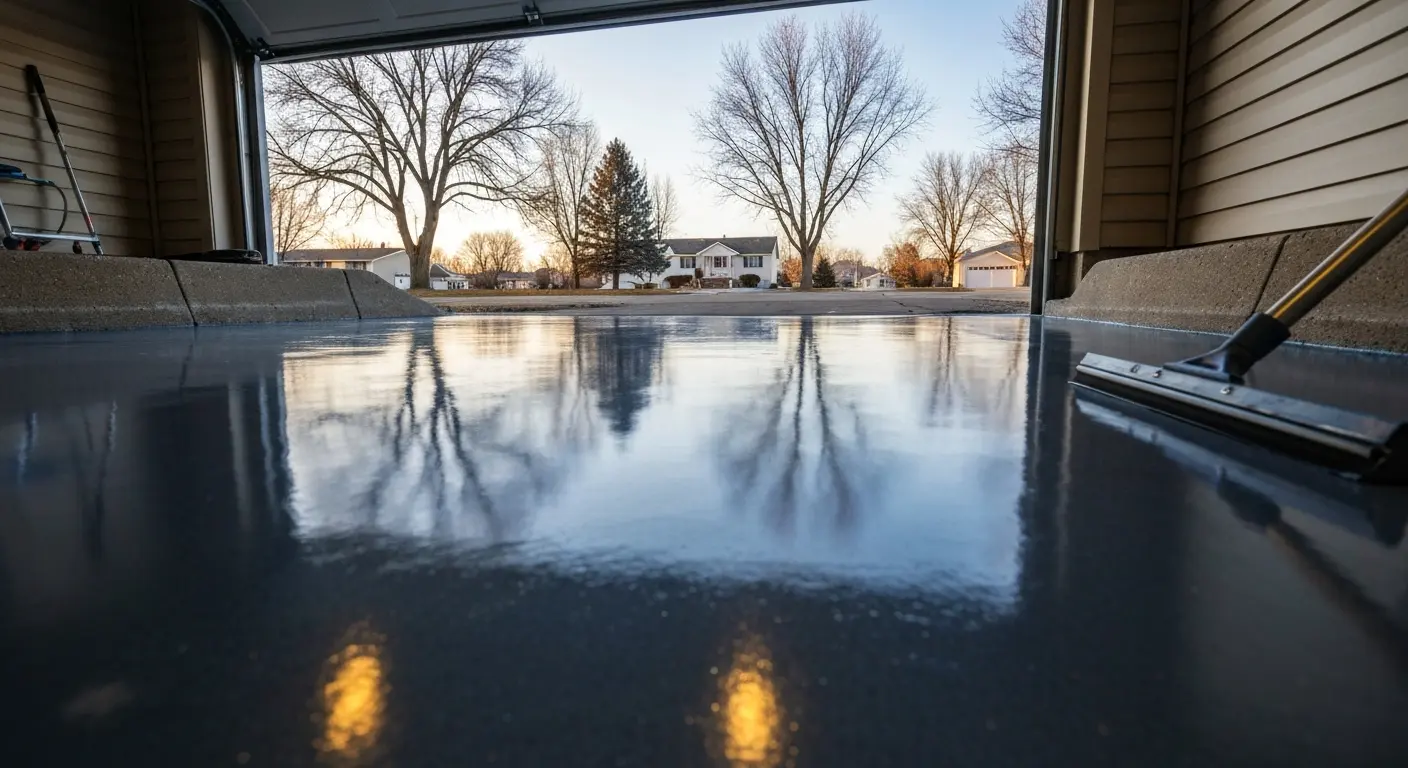
Epoxy-coated garage floor in Edina, resisting road salt and freeze-thaw stress.
Salt spray and snowmelt break concrete in Minnesota faster than bare coating can resist. Industrial-strength epoxy systems bond at the molecular level, blocking moisture from below and protecting against chemicals from above.
Garages, basements, and utility spaces in Edina, Hopkins, and throughout the Twin Cities see decades of performance when installed with moisture testing and proper surface prep.
- Blocks moisture vapor and road salt penetration
- Resists hot tire pickup in summer heat and winter slush
- Easy to clean—sweep away salt and sand without residue
Polyaspartic Floor Coating
When a garage needs to stay functional during Minnesota's short spring and summer, polyaspartic topcoats over a solid epoxy base provide rapid hardening without sacrificing durability. This hybrid system handles the schedule pressure many homeowners face near the Chain of Lakes and suburban neighborhoods.
Fast return to traffic combined with long-term protection against moisture and salt. Ideal for busy households in Northeast Minneapolis and surrounding areas.
- UV-resistant topcoat prevents yellowing under summer sun
- Quick foot traffic tolerance for seasonal transitions
- Strong adhesion even in humid conditions
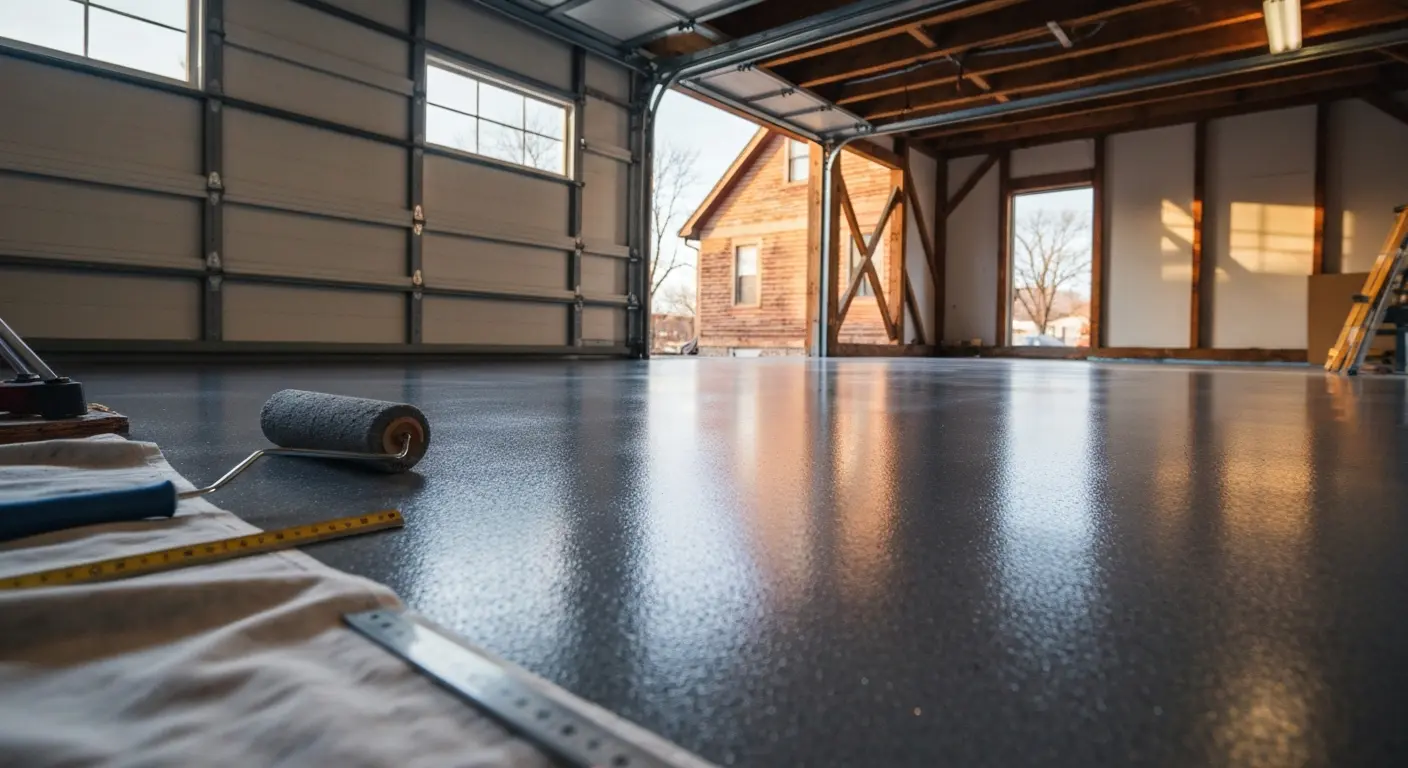
Hybrid epoxy/polyaspartic system in Northeast Minneapolis home, combining durability with schedule flexibility.
Garage Floor Installation
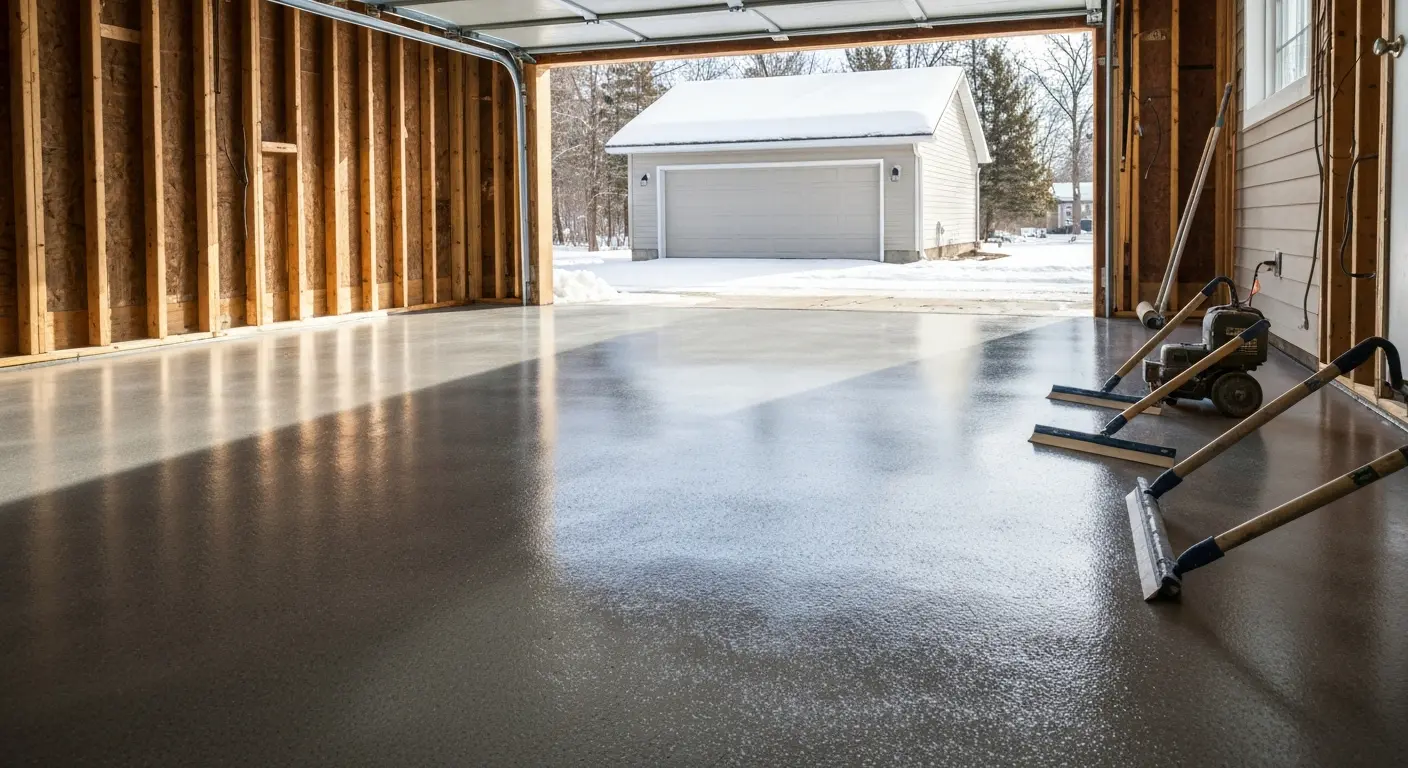
New garage floor installation with decorative flake finish in Hopkins, built to withstand twin winters.
Detached and attached garages in the Twin Cities need flooring engineered for freeze-thaw stress and heavy salt loads. We grind, test moisture, repair cracks, and apply systems designed specifically for Minnesota conditions—not generic kits.
Families in Edina, St. Louis Park, and Richfield rely on our concrete evaluation and multi-layer approach to avoid the common failures they see in other Twin Cities garages.
- Full moisture vapor barrier prevents below-slab water
- Thick high-build epoxy resists pressure from hot tires
- Broadcast or solid finishes for grip and appearance
Cabinet Making & Refinishing
Custom cabinets and refinishing for kitchens, bathrooms, and laundry rooms in Twin Cities homes. We work with wood types suited to Minnesota's humidity swings and temperature extremes.
Homeowners in Linden Hills, Uptown, and surrounding neighborhoods benefit from built-to-order cabinets and stains that don't crack or warp through winter heating and spring thaw.
- Solid construction with hardware rated for temperature shifts
- Custom sizing to fit any kitchen or bath layout
- Refinishing of existing cabinetry in single and multi-family homes
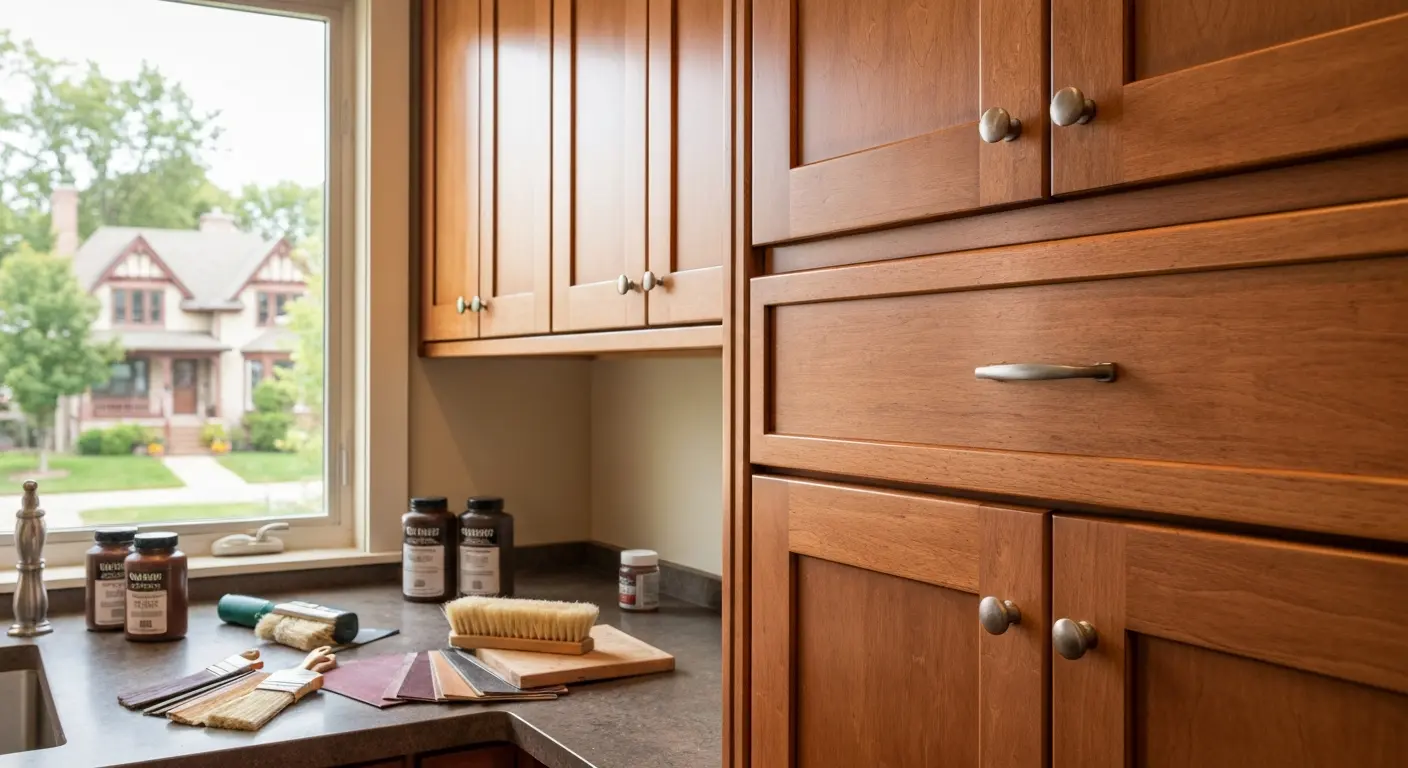
Refined cabinetry in a Linden Hills kitchen, finished to resist Twin Cities humidity and heat.
Why Local Expertise Matters
Minnesota winters are not like other climates. Standard epoxy systems fail here without proper moisture control and material selection.
Freeze-Thaw Cycles Break Weak Systems
Twin Cities concrete slabs experience moisture penetration from snowmelt, tracked salt, and slush. When water trapped beneath a coating freezes, it expands and pushes epoxy away from the surface. After 20–30 freeze-thaw cycles in a single Minnesota winter, peeling and white powder dust appear.
Professional systems include moisture vapor barriers and epoxy designed for sub-zero temperatures. DIY kits and low-cost contractors skip these steps and fail by February.
Key fact: Minnesota averages 77 days per year below freezing, compared to 40 days in most of the U.S.
Hot Tire Pickup & Road Salt
Tires heat to 140°F during highway driving. When a hot tire lands on a weak epoxy slab in a cold garage, the heat softens the coating and the cool contract causes the tire to bond and peel the surface as it cools. Road salt accelerates delamination underneath.
We use high-build epoxy systems with proper thickness and polyaspartic topcoats that resist both thermal shock and chemical attack from salt residue tracked into Twin Cities garages.
Permits & Code Compliance
Minneapolis and St. Paul have different setback and zoning rules for garages and renovations. Hennepin and Ramsey County permitting requires inspections at specific stages. We handle all paperwork and inspections, ensuring your flooring or cabinet work meets code.
- Know your building type (attached or detached garage)
- Test concrete moisture before applying any coating
- Grind, not just clean—proper prep prevents failure
- Verify cure conditions in winter vs. summer installations
Coverage Area
Serving residential and light commercial projects throughout the Twin Cities metro and surrounding suburbs.
Minneapolis & St. Paul
Downtown neighborhoods, residential wards, and industrial areas throughout the twin cities rely on our moisture-aware epoxy systems and cabinet refinishing. Many Victorian-era homes in St. Paul's Summit Avenue and Cathedral Hill areas benefit from our cabinet restoration work suited to heritage construction.
First-Ring Suburbs
Edina, Hopkins, Richfield, St. Louis Park, and Bloomington see frequent freeze-thaw damage to older garage slabs. Newer homes in these areas benefit from preventive epoxy coating before salt exposure accumulates. We serve single-family, multi-unit, and small commercial projects across these communities.
Outer Ring & Suburbs
Eden Prairie, Wayzata, St. Anthony, Arden Hills, and western suburbs benefit from our regional expertise. We accommodate both emergency repairs (failed coatings) and planned installations aligned with spring and fall project windows.
All Twin Cities areas: Call or schedule a free evaluation. We'll test your slab and recommend the right system for your climate zone.
Frequently Asked Questions
Why does my garage floor get white powder dust in winter?
Concrete deteriorates under freeze-thaw cycles. Water penetrates bare or sealed concrete, freezes, expands, and fractures the surface. Professional epoxy seals and reinforces the top layer before damage starts.
What is hot tire pickup, and will my new floor peel from it?
Hot tires (140°F+) soften weak epoxy. When the tire cools and contracts, it pulls the coating off the slab. High-build epoxy with proper cure prevents this. Polyaspartic topcoats add UV and thermal resistance.
Do I need a permit for an epoxy floor or cabinet work?
Flooring and cabinet work rarely require formal permits in residential garages and kitchens. If your project involves structural changes or attached garage work, check with Minneapolis or your city's planning department first. We verify and coordinate all requirements.
Can you install epoxy in winter or spring, when moisture is highest?
Yes. We test and adjust cure schedules for seasonal conditions. Winter installations require controlled ventilation and temperature management. Spring thaw periods demand extra moisture testing. Proper scheduling prevents failure.
How long will an epoxy floor last in Minnesota's freeze-thaw climate?
Properly installed epoxy systems last 10–20 years with seasonal maintenance (winter mats, salt cleanup). Professional installation, moisture barriers, and high-build epoxy significantly outperform DIY and cheap alternatives in Minnesota winters.
What's the difference between epoxy and polyaspartic for my garage?
Epoxy is the base—it bonds deeply and resists moisture. Polyaspartic topcoats cure faster and resist UV yellowing. For best results in Minnesota, we use epoxy base with a polyaspartic topcoat, balancing durability and schedule flexibility.
DISCOVER WHAT OUR CUSTOMERS HAVE TO SAY ABOUT US
REVIEWS
proudly serving these areas
Amery, WI
Forest Lake, MN
Hudson, WI
Osceola, WI
River Falls, WI
St Croix Falls, WI
St Croix Valley, WI
Stillwater, MN
READY TO take the next step?
get a free quote TODAY!
QUICK LINKS
our services
service areas
operating HOURS
Mon: 8:00 am - 4:00 pm
Tue: 8:00 am - 4:00 pm
Wed: 8:00 am - 4:00 pm
Thu: 8:00 am - 4:00 pm
Fri: 8:00 am - 4:00 pm
Sat: Closed - Closed
Sun: Closed - Closed